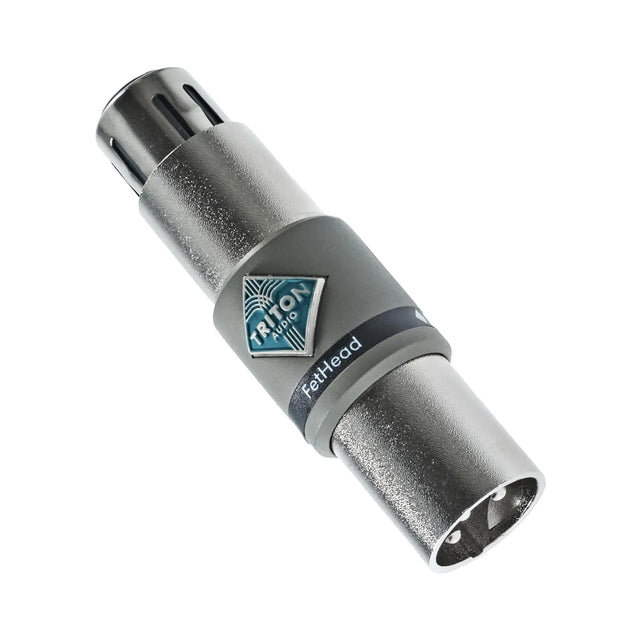
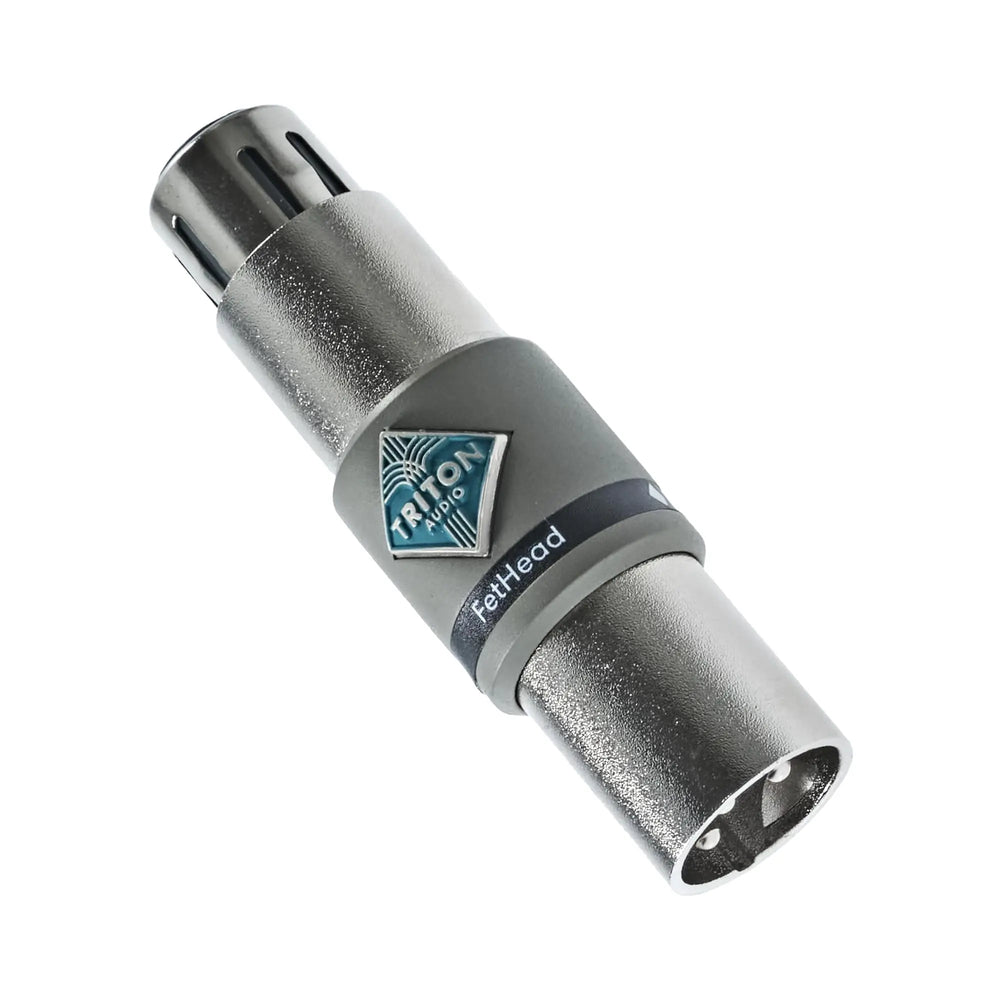
TritonAudio FetHead In-Line Preamp for Ribbon and Dynamic Microphones

Authorized Dealer
In Stock
Pick up available In-StoreEstimated Shipping Widget will be displayed here!
Condition: New
Description
TritonAudio FetHead In-Line Preamp for Ribbon and Dynamic Microphones
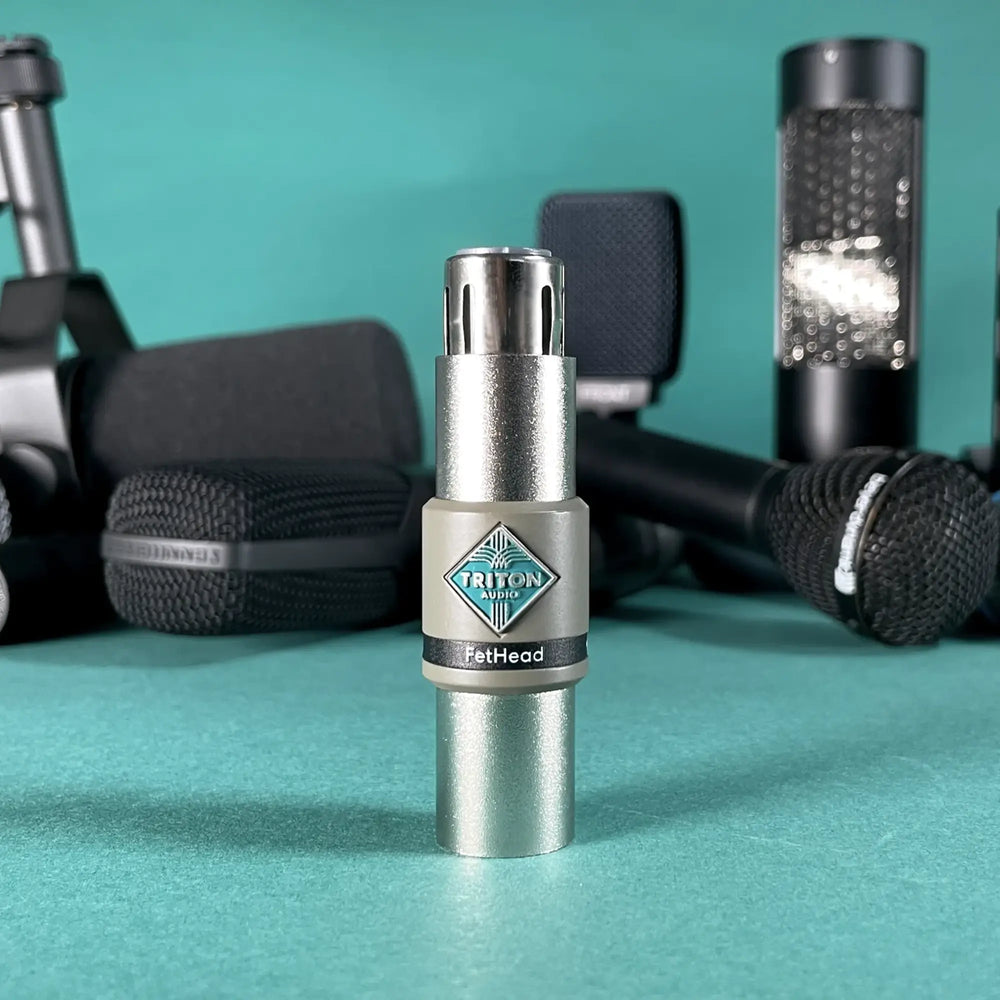
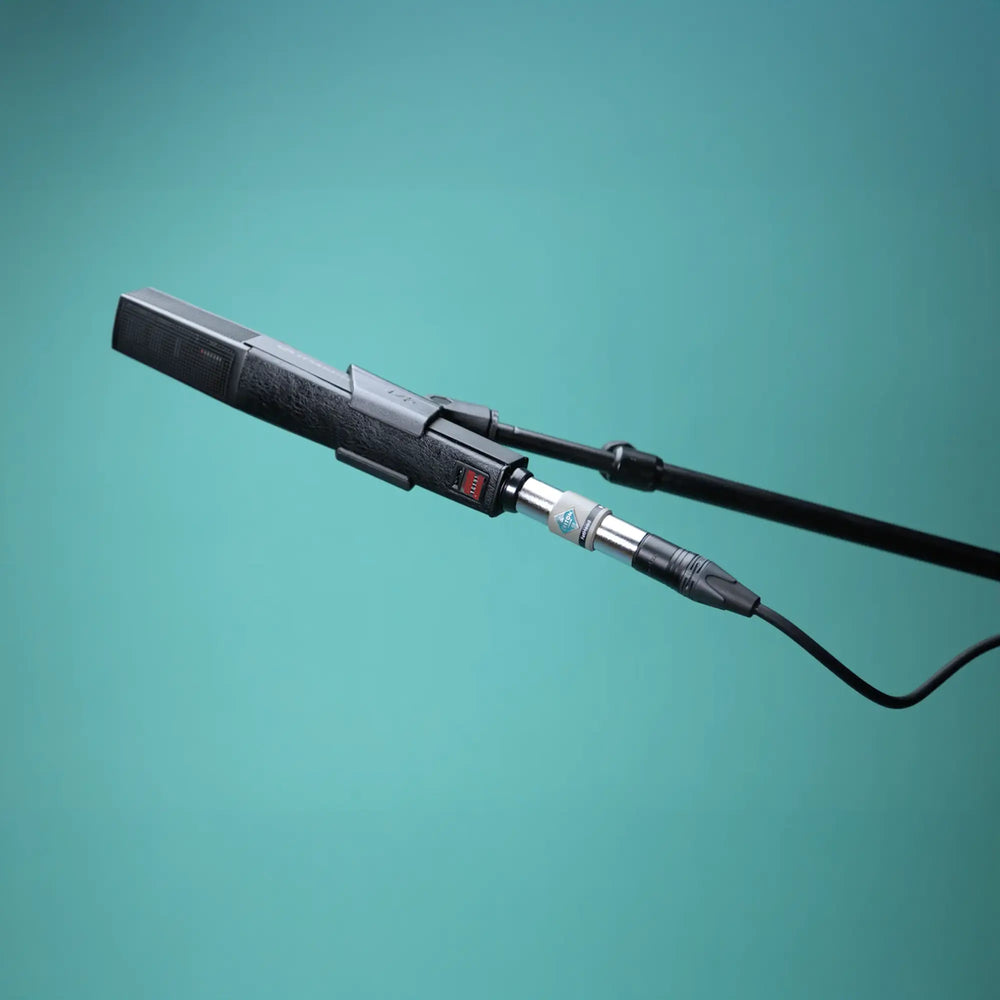
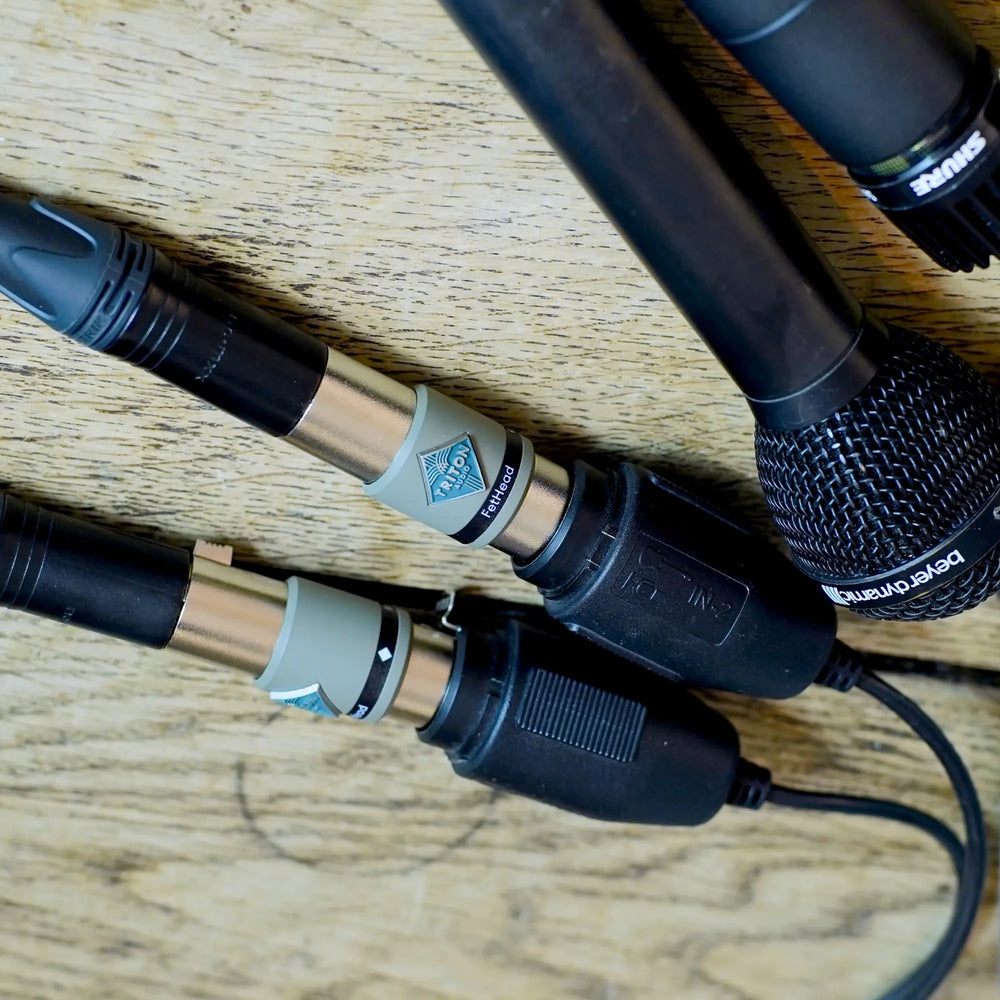
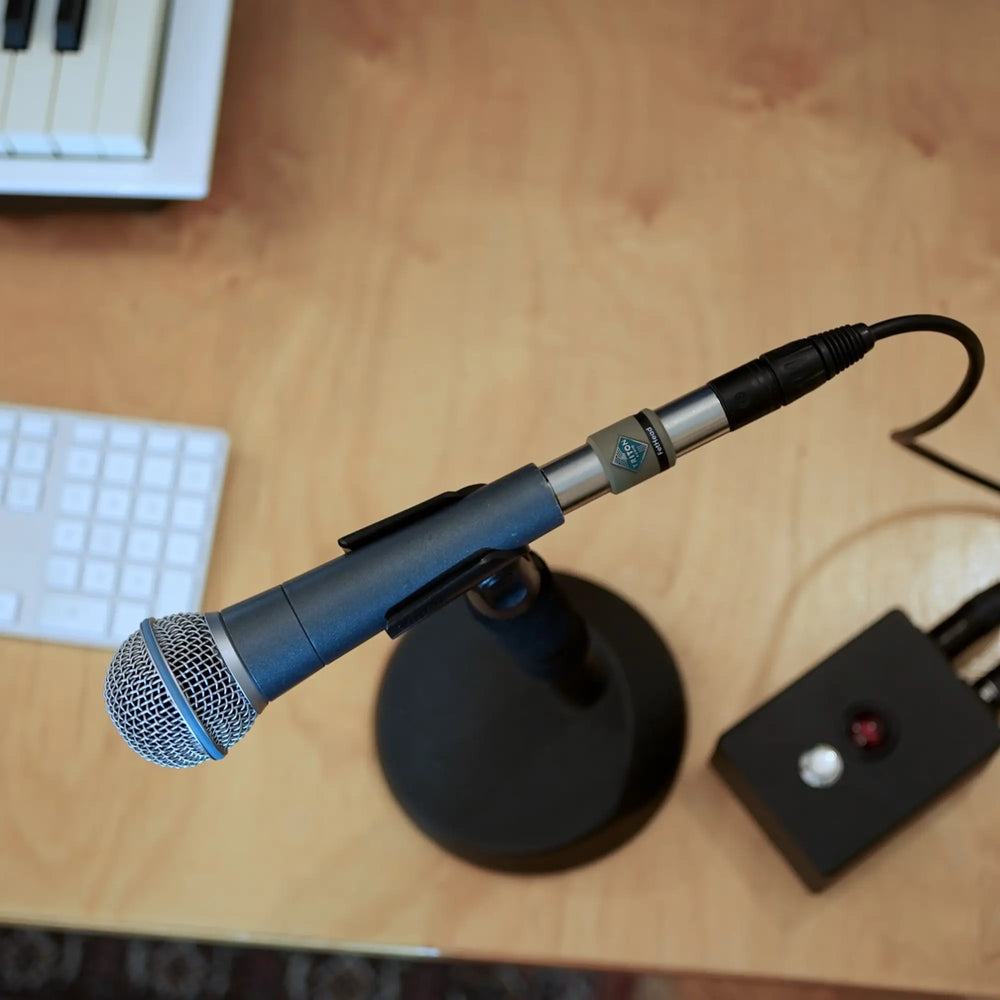
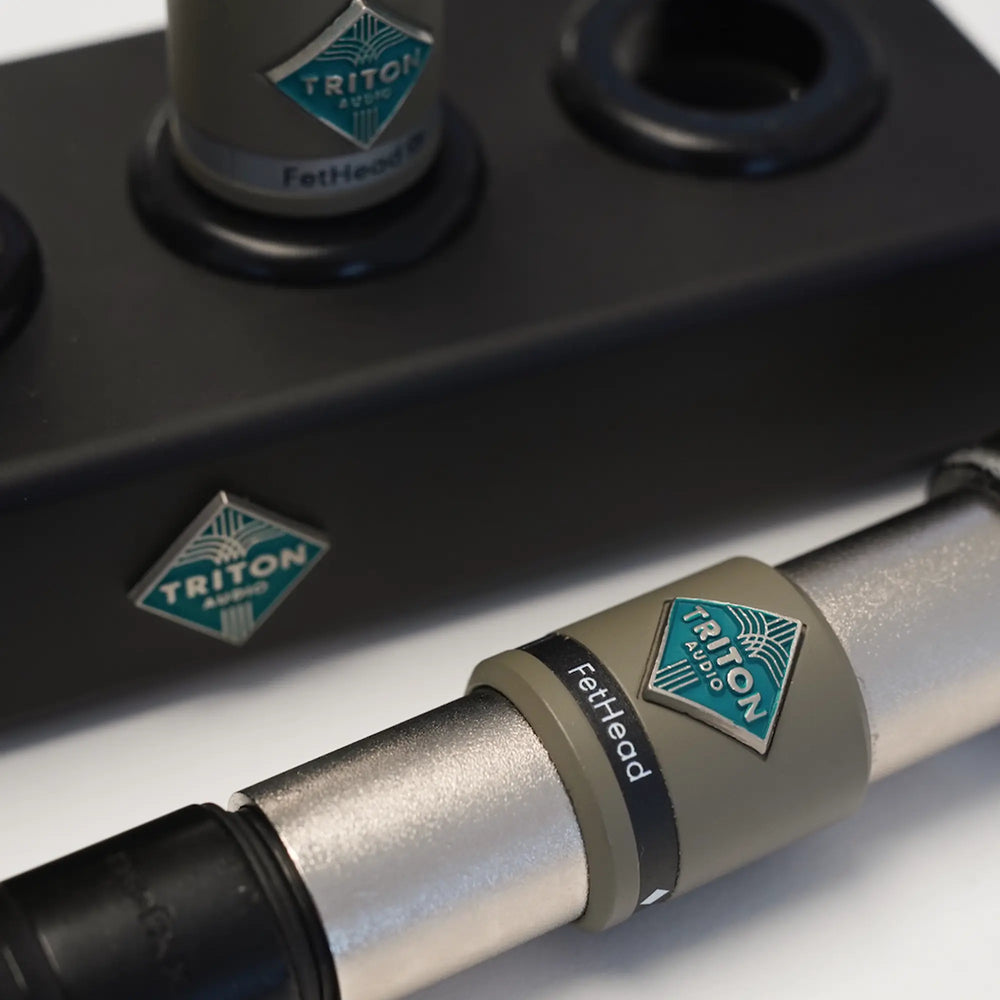
FetHead is a low-noise, high quality, in-line microphone preamplifier. It provides improved sound for Ribbon and Dynamic microphones. The electronics are housed in a robust metal chassis with a balanced 3-pole female XLR input and a balanced 3-pole male XLR output, rugged enough for use at home, in the studio or on tour.
Which microphones benefit
In short, we noticed an improvement on all tested microphones. A Shure SM57 for instance, sounds more responsive over a broader frequency range. When mated with a high-end dynamic microphone like a Sennheiser MD441, or Shure SM7 FetHead really shines. Ribbon microphones benefit greatly too because of a much better impedance match, which lessens the load on the microphone, giving it better transient response characteristics. FetHeads high quality, low noise signal amplification also extends the usable range of a ribbon microphone, making it more suitable for recording softer passages.
Protects the microphone
Some ribbon microphones do not tolerate phantom power. FetHead's circuit uses 48v phantom power but shields it from the microphone, the microphone is protected.
Key Features
- Ribbon and Dynamic Microphone Support: Designed to improve signal level for low-output microphones
- Clean Signal Boost: Adds gain before the main preamp for stronger microphone output
- Ribbon Microphone Protection: Shields phantom power from the connected microphone
- Rugged In-Line Design: Metal chassis supports home, studio, and touring use
- No-Load Performance: Allows the microphone to perform under a “no-load” condition
Technical Specifications
-
Audio Performance
- Gain: 27 dB amplification at 3 kOhm load
- Frequency Response: 10 Hz–100 kHz (+/- 1 dB)
- Input Impedance: 22 kOhm
- Amplifier Type: Ultra-low-noise Class A JFET amplifier
- JFETs: 4 matched JFETs
-
Connectivity
- Input: Balanced 3-pole female XLR
- Output: Balanced 3-pole male XLR
-
Power
- Phantom Power Requirement: 24–48V phantom power
- Phantom Power Handling: Uses phantom power for the circuit while shielding it from the microphone
-
Construction
- Enclosure: Shielded rugged metal chassis
Installation / Use Cases
- Boosting low-output ribbon and dynamic microphones before the main microphone preamp
- Improving microphone response for models such as Shure SM57, Sennheiser MD441, and Shure SM7
- Recording softer passages with ribbon microphones using low-noise signal amplification
- Home, studio, and touring setups requiring a rugged in-line XLR microphone preamp
- Protecting ribbon microphones with phantom-powered circuitry that shields phantom power from the microphone
Package Contents
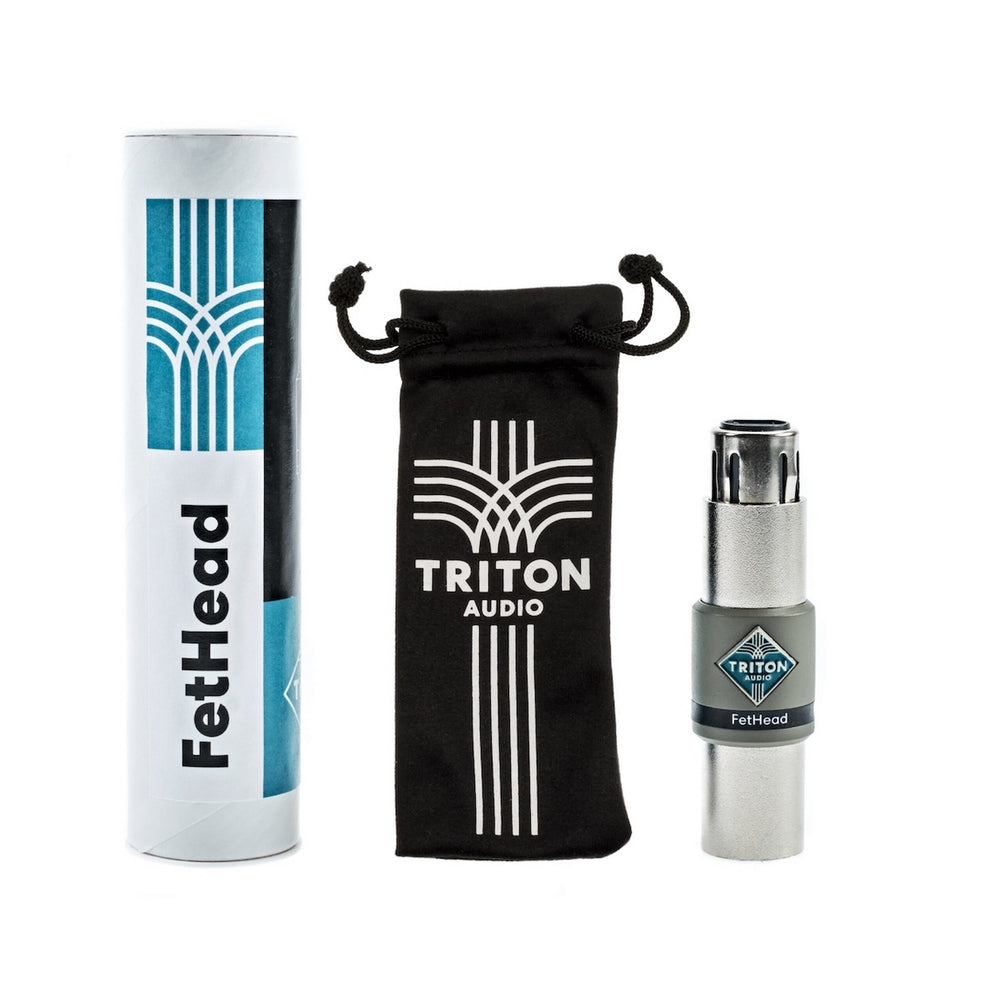
- TritonAudio FetHead In-Line Preamp for Ribbon and Dynamic Microphones
- FetHead Product Tube
- TritonAudio Drawstring Pouch
Frequently Asked Questions
What is the TritonAudio FetHead used for?
The TritonAudio FetHead is used to add clean in-line gain to ribbon and dynamic microphones before the signal reaches the main microphone preamp.
How much gain does the FetHead provide?
The FetHead provides 27 dB amplification at a 3 kOhm load.
Which microphones benefit from the TritonAudio FetHead?
The FetHead is designed for ribbon and dynamic microphones. The product page specifically mentions improved performance with microphones such as the Shure SM57, Sennheiser MD441, and Shure SM7.
Does the FetHead require phantom power?
Yes. The FetHead requires 24–48V phantom power to power its circuit.
Is the FetHead safe for ribbon microphones?
The FetHead uses phantom power for its internal circuit while shielding phantom power from the microphone, helping protect ribbon microphones that may not tolerate phantom power.
What connectors does the FetHead use?
The FetHead uses a balanced 3-pole female XLR input and a balanced 3-pole male XLR output.
What is the frequency response of the TritonAudio FetHead?
The FetHead has a frequency response of 10 Hz to 100 kHz, plus or minus 1 dB.